
Why Does the City Require a Backflow Preventer on Your Water Main?
If you've ever received a letter from the city about backflow testing and wondered why they care so much about one device on your water main, here's the short answer: water can flow backwards — and when it does, it can put a whole neighbourhood's drinking water at risk.
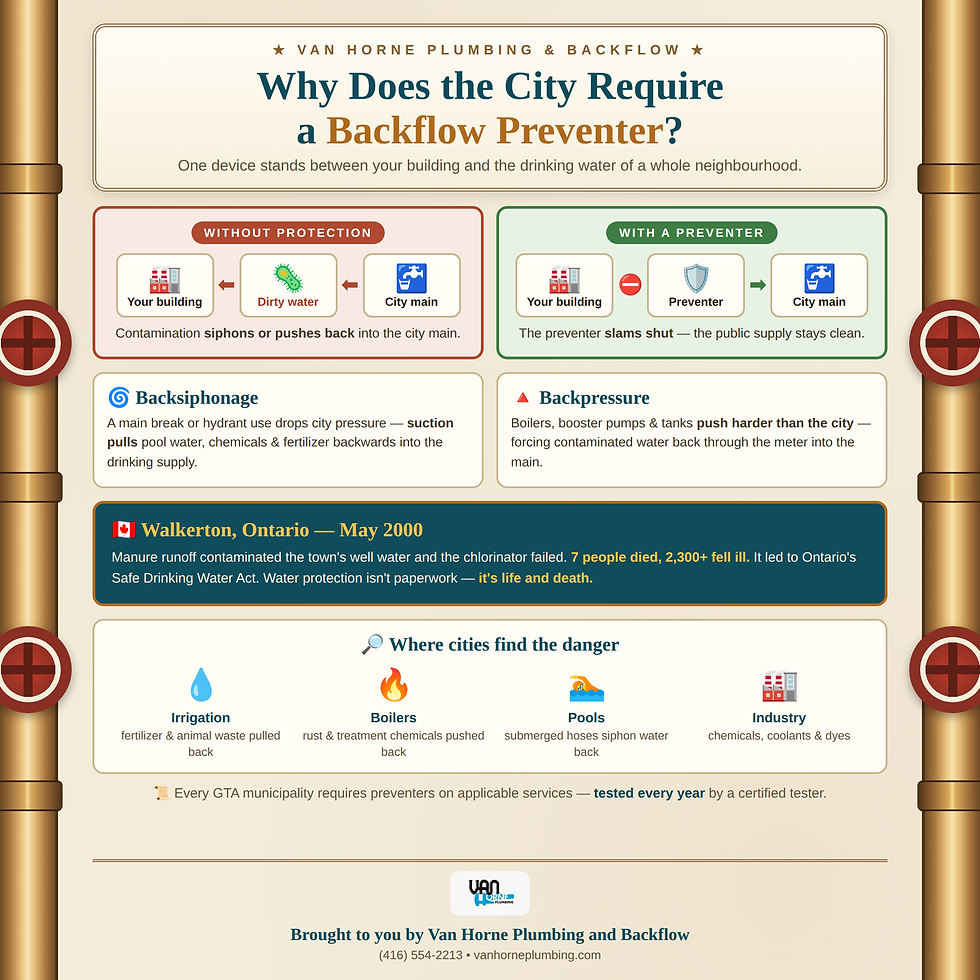
Your water main is a two-way street. Clean water flows from the city main into your building. But under the right conditions, that flow can reverse. There are two ways this happens:
Backsiphonage is when pressure in the city main suddenly drops — a water main break, or firefighters opening a hydrant — creating suction. A garden hose sitting in a pool, a fertilizer sprayer, or an irrigation line can get siphoned straight back into the drinking water.
Backpressure is when equipment inside your building — boilers, booster pumps, storage tanks — creates more pressure than the city supply, forcing contaminated water backwards through the meter and into the public main.
It happened here in Ontario. In May 2000, the town of Walkerton's drinking water was contaminated. Seven people died and more than 2,300 fell ill. It led to Ontario's Safe Drinking Water Act. Water protection isn't paperwork — it's life and death.
That's why annual testing is mandatory. Every municipality in the GTA requires backflow preventers on applicable water services, tested every year by a certified tester. An untested preventer is treated the same as no preventer at all.
If your building received a notice from the city, or you're not sure when your device was last tested, get in touch. Annual testing keeps you compliant — and keeps the water safe for everyone.
— Nick Brienza, Van Horne Plumbing and Backflow, (416) 554-2213
Comments